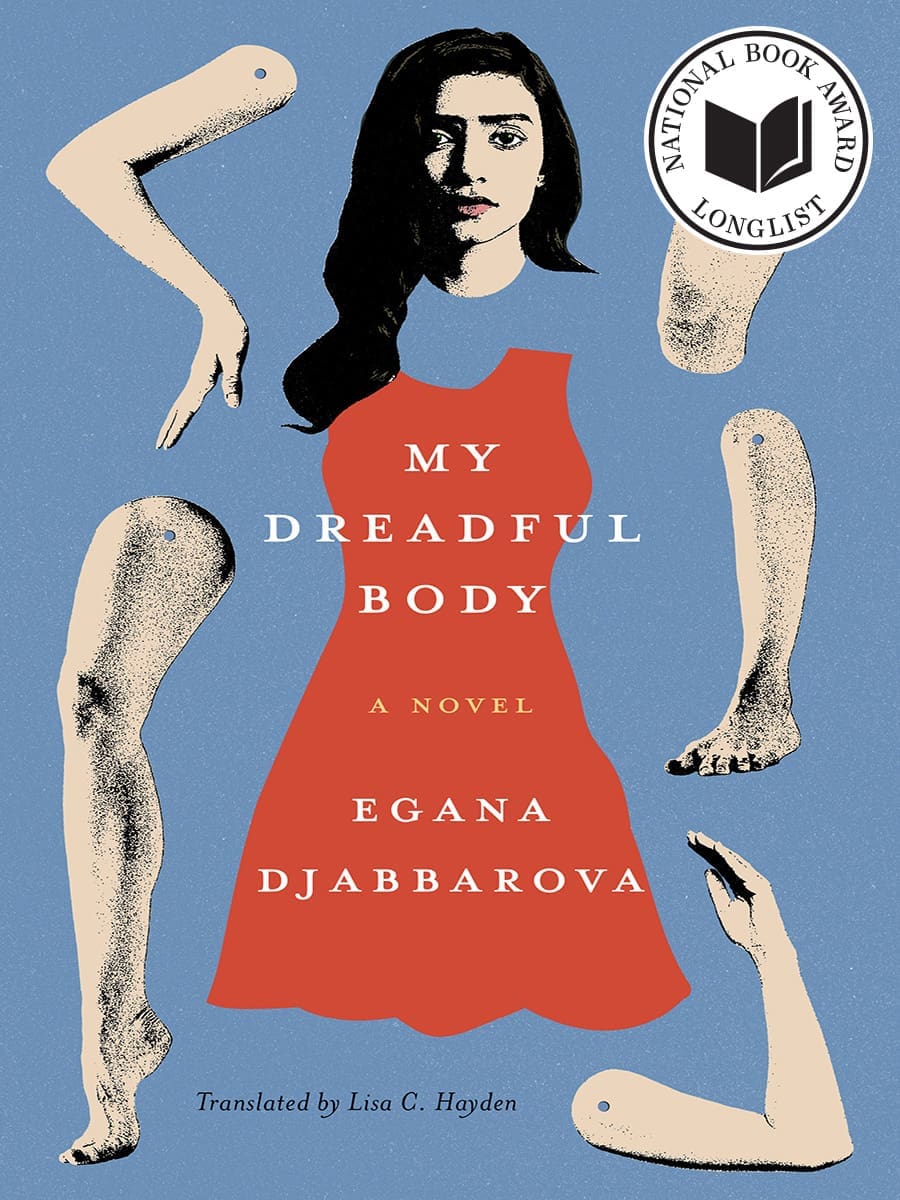
NATIONAL BOOK AWARD FOR TRANSLATED LITERATURE LONGLIST
CERCADOR PRIZE FINALIST— FOREWORD REVIEWS BEST 10 BOOKS of 2026
A dazzling debut novel about a young woman’s vexed coming of age in a traditional Azerbaijani community in Russia, grappling under the weight of Muslim patriarchal norms and a debilitating neurological condition. The mysterious affliction leaves her unable to control her muscles, plagued by pain and speech disorders, defying diagnosis. Addressing each body part with the scrupulousness of a medical researcher, the narrator explores memories, traditions, and taboos related to her physical self. In the process, a woman once destined for the role of a beautiful marriageable daughter comes to be perceived as damaged goods. With verbal elegance and poetic power, Egana Djabbarova unveils a hidden world in which illness unexpectedly facilitates her liberation. Her book stands in the proud tradition of confessional feminist writers like Sandra Cisneros, Arundhati Roy, Audre Lorde, Toni Morrison, and Jamaica Kincaid.
Download the My Dreadful Body Reading Group Guide.
Excerpt from My Dreadful Body
According to my mother’s strict orders, the big, bushy
black eyebrows in the oval mirror were not to be plucked.
This was not just because Allah forbids his creatures from
changing anything about their bodies. It was also because I
was unmarried. The primary event in the life of any young
Azerbaijani woman, after all, is undoubtedly her wedding
and only that wedding can bestow the right to make changes,
even if Allah does not approve of them. In small mountain
settlements, the eyebrows were first and foremost in differentiating
an innocent, unmarried young woman from a woman
who had already married.
A married woman’s eyebrows were even, almost artificial,
and so thin they might have been drawn with ink to let people
around them know that a girl was now forever a woman,
that thick brows resembling paradisiacal shrubbery were in
her past. Yes, most of the girls in a typical Russian school who
admired themselves in tiny little round mirrors from state-run
newsstands were perfectly calm when they used soulless
metal tweezers to pluck unruly, bristly little hairs. I pondered
for a long time what possible danger there could be in tweezing
my eyebrows, given that the girls in my class were all still
the same the next day, maybe even a little happier. My brows
seemed to expand daily, occupying more and more space
between my eyelids. If my girlfriends had something like pale
vines, then I had the huge dark wings of a mountain bird.
The question of how to deal with my eyebrows preoccupied
me just as much when we went to visit my father’s
relatives in Baku. Dense mattresses and coverlets of various
colors, adorned with all kinds of decorations, lay, lazily
stacked, on a bed in a small room. My aunts and grandmothers
had filled most of those mattresses themselves. They
first thoroughly washed lambswool, then carefully laid it out
right in the yard, under the dazzling Baku sun, until the time
came for the longest and most torturous part of assembly.
Clean pillowcases decorated with roses were quickly filled
with wool that Mama and Bibi, my aunt, packed in firmly,
as if it were stuffing for a gutted turkey. They then sewed the
edges by hand and pierced the center of the mattress with
long stitches made by the very thickest and largest needles,
which were so difficult and dangerous to use that they often
covered the women’s hands in bloody constellations. It was
on those lovingly sewn and stacked mattresses that I sat with
my cousins, silently observing how grown women with glistening
rings on their fingers used silk thread to pull out each
other’s brows.
I recall wondering where their hands had mastered all
those secret motions and how they’d learned to manipulate
the thread so quickly and energetically that it flawlessly
removed the unwanted while leaving the essential. The skin
reddened quickly after recognizing the bitterness of loss, as if
it mourned each tiny hair. Twenty minutes later, new brows
had replaced the old, engraved on the skin like an ornament
on a vase. Cold, calm, and unaware of their own past, those
brows lent the face’s owner a new expression unique to anyone
acquainted with the strength of one’s own willpower and
the possibility of changing one’s body.