“A mature and unique literary talent … Zarhin gives us a tangible make-believe world soaked in smells and tastes … like a rich flavorful stew that keeps brimming over.”
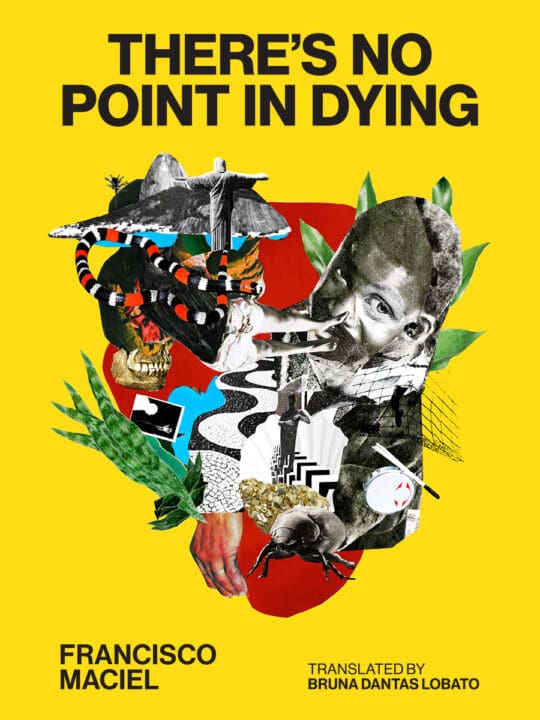
In this kaleidoscopic novel set in a favela of Rio de Janeiro—“in the city of stray bullets, in the land of lost opportunities”—a gang member runs wildly through the streets not knowing he has only seven minutes left to live. Barflies, prostitutes, immigrants, a gay couple, a taxi driver, cops, a mobster, and more populate Francisco Maciel’s first book to appear in English. Leaping back and forth across time and spiraling into the surreal, the novel coalesces around a brutal massacre. Maciel’s multiracial characters write poetry and discourse on soccer, insects, samba, and climate change. Gritty, unpredictable, and percussive, There’s No Point in Dying is translated by National Book Award winner Bruna Dantas Lobato.
A literary celebration of Christmas south of the equator where the holiday falls during the Brazilian summer and the festivities are punctuated by the rhythms of surf and samba. Including works by classic and contemporary authors, this bountiful, surprising anthology features a potent mix of familial feasts, poetry, the peal of church bells, Midnight Masses, and U.S. expatriates flirting at parties in Rio de Janeiro. Writings by Machado de Assis, Mário de Andrade, Clarice Lispector, Paulo Coelho, Graciliano Ramos, Lygia Fagundes Telles, Moacyr Scliar, Rubem Braga, Victor Heringer, Bruna Dantas Lobato, and more.
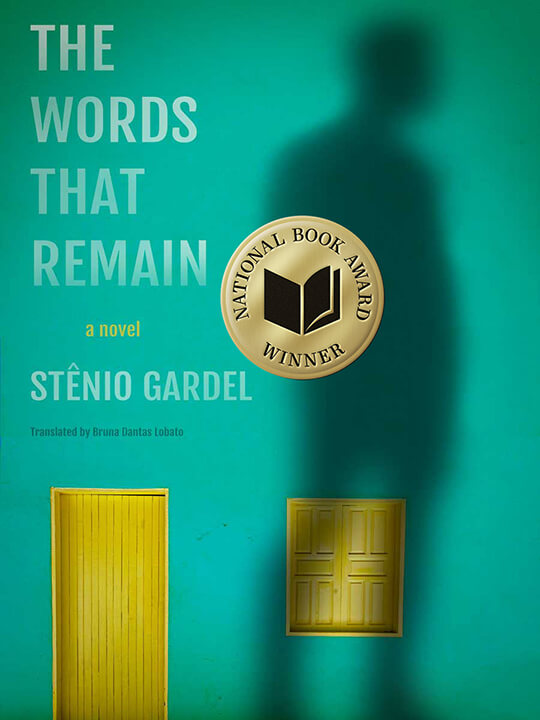
A letter has beckoned to Raimundo since he received it over fifty years ago from his youthful passion, handsome Cícero. But having grown up in an impoverished area of Brazil where the demands of manual labor thwarted his becoming literate, Raimundo has long been unable to read. As young men, he and Cícero fell in love, only to have Raimundo’s father brutally beat his son when he discovered their affair. Even after Raimundo succeeds in making a life for himself in the big city, he continues to be haunted by this secret missive full of longing from the distant past. Now at age seventy-one, he at last acquires a true education and the ability to access the letter. Exploring Brazil’s little-known hinterland as well its urban haunts, this is a sweeping novel of repression, violence, and shame, along with their flip sides: survival, endurance, and the ultimate triumph of an unforgettable figure on society’s margins. The Words That Remain explores the universal power of the written word and language, and how they affect all our relationships.