THE REMEMBERED SOLDIER named to the International Booker Prize Longlist

|
  • related:


THE REMEMBERED SOLDIER is longlisted for the International Booker Prize 2026. Here’s the Booker judges’ citation: “A soldier without his memory; a wife in search of her missing husband—if you thought that all war stories were the same, not so. Some years after the Great War, Noon Merckem is found wandering in a field in Belgium, amnesiac and adrift. In time, he is claimed, but it is not so easy to return to an elusive past. In Daanje’s hands, and in McKay’s intuitive translation, the ravages and shellshock of the First World War are superbly traced—but the big question at the heart of this novel is how far humans will go in order to love, how fiercely they will fight for what they intend to have and to hold.”


THE REMEMBERED SOLDIER named a National Book Award FINALIST

|
  • related:


THE REMEMBERED SOLDIER is also named one of The 10 Best Books of 2025 by the The Wall Street Journal which praises how Anjet Daanje’s “incantatory prose, translated by David McKay, makes ordinary aspects of marital life feel newly discovered.” It’s the latest honor for THE REMEMBERED SOLDIER that’s been named to The New York Times 100 Notable Books of 2025Publishers Weekly 2025 Best Books of the Year—2026 PEN Translation Prize Finalist—Chicago Public Library Best Books of 2025—World Literature Today‘s 75 Notable Translations of 2025—The New York Times “The Best Historical Fiction Novels to Read Right Now” and Literary Hub‘s 100 Notable Small Press Books of 2025.


Russian Author Sergei Lebedev U.S. Visit

|

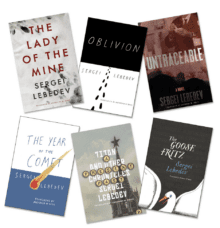
Thursday, April 17, Philadelphia, University of Pennsylvania, 5:30 p.m., Presentation and discussion of The Lady of the Mine with author Sergei Lebedev and translator Antonina W. Bouis. English Department Faculty Lounge, Fisher-Bennett Hall, Room 135. Click here for more details.

Friday, April 18, New York City, Harriman Institute, Columbia University, 5-6:30 p.m. Sergei Lebedev discusses “Excavating Russian History: Literature Against Oblivion.” Click here for free registration, required by April 17.


|
  • related:


Watch a video discussion of Nazi art plunder in Paris with THE VANISHED COLLECTION author Pauline Baer de Perignon and Holocaust Art Restitution Project co-founder Marc Masurovsky in a program co-sponsored by The Winter Show and American Friends of the Louvre. Click here to view.


THE EYE unveils secrets of Old Masters connoisseurs.

|
  • related:


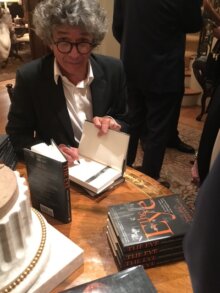
Learn about a rare and secret profession by watching this video of an online conversation, sponsored by American Friends of the Louvre and the National Arts Club in New York, with art historian Philippe Costamagna about his book THE EYE: An Insider’s Memoir of Masterpieces, Money, and the Magnetism of Art. Click here to watch this event for free.


Stay Open to the World Package

|
  • related:


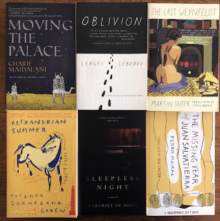
Stay open to the world: Read literature in translation with this fantastic discounted package of six books that will take you to Sudan, Lebanon, Russia, Argentina, Switzerland, Egypt and the Netherlands. An extraordinary literary journey for just $60, and we’ll provide free shipping (U.S. residents ONLY). This package comprises one copy each of Moving the Palace, Oblivion, The Last Weynfeldt, The Missing Year of Juan Salvatierra, Sleepless Night and Alexandrian Summer.

https://store.newvesselpress.com/stay-open-to-the-world-package-of-six-books/


European Travel Package

|
  • related:


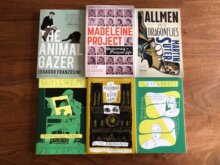
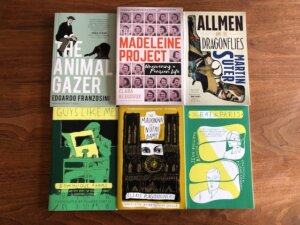
Enough quarantine, let’s go to Europe! These six books will take you to Paris, Zurich, Milan and Antwerp. An extraordinary literary journey that’s yours for only $60, with free shipping included (U.S. residents ONLY). This package comprises one copy each of The Madeleine Project, Allmen and the Dragonflies, Guys Like Me, The Animal Gazer, The 6:41 to Paris and The Madonna of Notre Dame. 

Click here to purchase: https://store.newvesselpress.com/european-travel-package/


The Drive – Video Discussion with Author Yair Assulin

|
  • related:


Watch a video of Israeli author Yair Assulin, Booker Prize winning translator Jessica Cohen and novelist Ruby Namdar discussing THE DRIVE in a program held on April 19, 2020, co-sponsored by McNally Jackson Books in NYC and City Lights Booksellers in San Francisco. 

THE DRIVE by Yair Assulin is a powerfully subversive novel in a long tradition of anti-militarist literature, with existentialist echoes of Céline's Journey to the End of the Night, Remarque's All Quiet on the Western Front and Hašek's Good Soldier Švejk. Watch the video where novelist Ruby Namdar lays it out in an engrossing discussion with Assulin and his Booker Prize winning translator Jessica Cohen.

Posted by New Vessel Press on Monday, April 20, 2020


Author of THE MADONNA OF NOTRE DAME on the Cathedral’s Future

|

Notre Dame’s Charred Glory and the Challenge of Globalized Modernity


By Alexis Ragougneau


Ten years ago, I worked in the Cathedral of Notre Dame in a job that consisted of ensuring the two groups that came to the massive church every day—the worshipers and the tourists in the tens of thousands—got along with each other. Notre Dame de Paris is as much a Tower of Babel as a Christian bastion, performing a dual role as a church and a monument accessible to the world.


One summer afternoon, I took a break from my task as a crowd monitor in the sanctuary and managed to ascend to the upper framework of the building. It was one of the most extraordinary sights I’ve ever seen—a tangle of beams that has been dubbed “the forest” because it required cutting down a thousand oaks to build it. The ascent into the heart of this structure was like finding oneself in the hold of an immense galleon. To be there was also to come into dialogue with those whose hands created it in the 13th century, working with the knowledge that they themselves would never see the result of this phenomenally long-range construction project. To ascend into the forest was to feel roots under your feet.


A small door gave onto the roof. The lead tiles gave off a blinding light and radiated intense heat. The panorama over the Ile de la Cité took my breath away. At a height of two hundred feet, one was no longer in a ship’s hold, but rather among its masts. Notre Dame de Paris is a vessel that navigates along the River Seine between a glorious past and the challenge of a globalized modernity.


Using these experiences, I’ve written two novels set in the cathedral. The main protagonist, Father Kern, develops the idea that guides his actions: the primary divide among people doesn’t derive from religion, skin color or social standing; the true divide is between doves and hawks; the willingness to extend one’s hand rather than give into the temptation to withdraw into oneself.


On April 15, the forest burned. The roof melted and the great spire that dominated the cathedral collapsed, piercing the edifice’s very heart. The upper level, where it was possible to see things in perspective, is no more. That night, the people of Paris gathered to watch their cathedral ablaze. Believers and non-believers, each suddenly feeling less anchored in the earth. In the ensuing hours, an amazing mobilization occurred. The French government called for a restoration within five years. An architectural competition was announced. And nearly a billion euros were collected from businesses and private individuals to reconstruct the ravaged Notre Dame.


Then the first controversies broke out—very French battles: Should the reconstruction be identical to the old? And all this money donated by billionaires, why couldn’t they have given it instead to those who live on the streets? Notre Dame de Paris is, in both its sublime history and its tragic fire, the symbol of nation consumed in its opposition to the past and the future, the right and the left, rich and poor. A country no longer in harmony nor even capable of self-understanding.


At times the same thing can happen with monuments as with individuals: it’s in the moment that we fear losing them that one realizes how much we value them. Confronted by the cathedral’s fragility, even though its wall are still standing, we remember the imperative to watch over our heritage, material and spiritual. France is a living democracy in a Europe that has ensured us decades of peace and, no matter what one says today, a certain degree of prosperity. Perhaps we have come to take it for granted, to consider it a given, just as we have at times passed by Notre-Dame without even seeing it.


Forgive me for seeking to find meaning in this conflagration, but it’s the inveterate habit of a writer to see metaphors everywhere. To see the big picture, as you say in English, and God knows that our British friends are taking the measure of the violent fire now ravaging their own country. Certain ideas and values have united us as a people. They don’t have the solidity of stone but they have passed the test of time. The artisans who built them piece by piece made sure everyone could take refuge in them and feel reassured. Certainly, it’s necessary to undertake renovation, keep European democracy up to date, avoid its mummification, and prevent it from being distorted by a few with great power.


That terrible night, around 9 p.m., the fire began to move toward the north tower. The heroic firefighters managed to contain it. If the north tower had collapsed, the entire cathedral would have fallen, and all would have been lost.


So in the face of the ravaged monument that thankfully endures, let’s take care not to feed the fire by giving free rein to pyromaniacs who benefit from populism and set citizens against one another by stoking the rage that currently prevails within the country. And because the Notre Dame fire and its aftermath have touched people everywhere, it’s clear that this need for vigilance also applies around the world.


Alexis Ragougneau is the author of The Madonna of Notre Dame


Banned Books Week 2017

|
  • related:


It’s Banned Books Week, and we’ve put together a little reading guide featuring books from New Vessel Pressand a few other great indie presses who publish literature from around the world, including Open Letter, Archipelago Books, Deep Vellum, Grove Atlantic, and Bellevue Literary Press. We’ve included works by authors whose work has been repressed by both hard and soft means: sometimes, a book doesn’t have to be put on an official “Do not publish” list to disappear from discourse. Quite often books, or authors, are simply ignored, newspapers are pressured not to review certain works, or authors are forced to flee their homelands or face severe repercussions, though all “unofficially.” This expansive understanding of “Banned Books Week” allows us to widen our perspective and think about what it means to muffle voices of dissent inside a country, or culture. We hope you’ll choose a few of these books and give them a read. They’re not only insights into foreign cultures and disturbing histories, they’re also, quite simply, very enjoyable literature.

You can download the guide here and share it with friends. Thank you!

Banned Books Week 2017 Indie Press Guide


Crain’s New York Business on New Vessel Press becoming “an instant classic.”

|
  • related:


Found in Translation:

How a publishing company ‘spun gold out of nothing.’


By Peter S. Green


It began as idle chatter. Two multilingual literature buffs met at a middle school spelling bee and talked about the foreign books they’d read that had never been published in the U.S. Why not, they thought, open a publishing house and translate their favorites?

“But neither of us had any experience in book publishing,” said Michael Wise, a former Central Europe correspondent for Reuters.

New Vessel Press, founded in 2012 by Wise and Ross Ufberg, then a Ph.D. candidate in Slavic studies at Columbia University and now an editor at online magazine BreakGround, translates and publishes six books annually. The pair pooled $100,000 of their own money to start it. The money went quickly to buying publishing rights, hiring translators and a cover designer (up-and-coming New Yorker cartoonist Liana Finck), building a website, publicizing their venture and paying for printing their first year’s catalog, all before a single book was sold.

Finding manuscripts isn’t hard. Only 3% of books published in the U.S. are translations. The men travel to book fairs in Germany and the United Arab Emirates, get recommendations from friends and read voraciously—Wise is fluent in German and French, and Ufberg, in Polish and Russian. They have become a go-to outlet for foreign publishers. “We look for novels and nonfiction that put you in another place, give you access to another culture, transport you,” Ufberg said.

“What we are doing is all the more important because of the politicians who would just as soon ignore the rest of the world,” said Wise.

Their first book, The Missing Year of Juan Salvatierra by prominent Argentine writer Pedro Mairal, was named one of New Republic’s 10 best books of 2013. Oblivion, a dive into the legacy of Soviet-era prisons by Sergei Lebedev, was chosen by The Wall Street Journal as one of the top 10 novels of last year. “Every other book on that list was by a major corporate publishing house,” Wise said.

Their latest is The Madeleine Project by French journalist Clara Beaudoux, who discovered a storeroom full of papers and photographs belonging to the previous tenant of her Paris apartment and reconstructed the woman’s life through a multiyear storm of tweets. “It’s a graphic novel of the digital age,” said Wise.

“Ross and Michael have really spun gold out of nothing; they’ve really made an instant classic out of New Vessel,” said John Oakes, director of the New School Publishing Institute and co-founder of OR Books.

Critical success aside, making money in the book business is tough. New Vessel lists books for $16, which are sold wholesale for $8, minus a $2 or $3 fee to the distributor. Translations can cost from $3,000 to $10,000, depending on the length and difficulty of the text and the renown of the translator. Grants from foreign cultural institutions cover about a third of the cost of translation.

The partners say they are approaching profitability, with revenue in the low six figures. Their titles sell between 3,000 and 7,000 copies, and sales were up 40% from 2015 to 2016. New Vessel buys worldwide English-language rights, making some money by selling to publishers in Great Britain and Canada. Occasionally, New Vessel gets a cut when a title is optioned for film, like Killing the Second Dog, by late Polish writer Marek Hlasko. Actor Richard Gere helped convince Hollywood studio Tadmor Films to option the screen rights for the tale of two down-and-out Poles scamming lovelorn women in 1960s Tel Aviv, Israel. New Vessel stands to earn a six-figure fee.

Another strategy is to find the next Stieg Larsson, the late Swedish author of the best-selling Millennium trilogy. The pair sees potential in Martin Suter, a German-Swiss crime writer who sells hundreds of thousands of books in Europe. His art-fraud thriller The Last Weynfeldt, published last year by New Vessel, is the first of a three-book deal that Ufberg hopes will gradually seed the market. “Suter didn’t become the biggest-selling author in Germany overnight,” he said.

Marketing remains a challenge. New Vessel offers an annual subscription for $72. Volume is still low, so Ufberg wraps all the subscription books in pastel crepe paper himself, the kind of personal touch that distinguishes New Vessel from large-scale publishers. They organize tours of major U.S. cities for their authors (paid for by the universities and cultural centers they visit). Reviews in The New York Times and The Wall Street Journal give them material to share during a book’s social-media campaign. Ufberg and Wise also occasionally set up a folding table in front of Zabar’s on the Upper West Side, where selling 30 books on a slow afternoon is a success. That’s given them a freedom absent at larger publishing houses that are guided by marketing studies. “We don’t have to pass things through a committee,” Ufberg said. “If we say it’s a fantastic book, we can just publish it.”

And they are reassured that enough people want what they can provide. “Our sales are up,” said Ufberg. “A lot of people are looking for entertaining, intellectual, good reads, and as long as we can keep providing them, we’re OK.”

A version of this article appears in the May 1, 2017, print issue of Crain’s New York Business as “Found in translation”.


Salvatore Settis Schedule of U.S. Appearances

|
  • related:


Salvatore Settis, author of the much acclaimed book If Venice Dies, will be embarking on a U.S. tour, with stops in Providence, Washington, D.C., New York, Philadelphia, and Los Angeles.

Tuesday, October 25, 7 p.m.
Brown University lecture; Providence, R.I.
http://www.brown.edu/Departments/Joukowsky_Institute/events/


Thursday, October 27, 3-4 p.m.
Library of Congress; Washington, D.C.
https://www.loc.gov/rr/european/calendar/calendar.html


Sunday, October 30, 2 p.m.
Philadelphia Museum of Art
The Irma and Herbert Barness Lecture
http://www.philamuseum.org/calendar/?gv=0&id=30&et=7&dt=October_2016


Monday, October 31,
 4 p.m.
Conversation with author and journalist Alexander Stille at NYU Casa Italiana, New York City
http://www.casaitaliananyu.org/content/book-presentation-if-venice-dies-with-salvatore-settis-and-alexander-stille


Tuesday, November 1, 12 p.m.

92nd Street Y, New York City
http://www.92y.org/Event/If-Venice-Dies


Wednesday, Nov. 2, 6-7:30 p.m.
Bard Graduate Center, New York City
The Protection of Cultural Heritage in Italy: A Short History and Some Current Issues
http://www.bgc.bard.edu/news/events.html


Saturday, Nov. 5 – 2 p.m.
Museum Lecture Hall, The Getty Center, Los Angeles
http://www.getty.edu/research/exhibitions_events/events/settis_venice.html


Catalogue 2016-17

|
  • related:


Click here to download our catalogue for 2016-17, featuring works from around the globe.


Upcoming events with Klaus Wivel

|
  • related:


Klaus Wivel, author of The Last Supper: The Persecution of Christians in the Middle East, will be participating in the following events:

Wednesday, April 27
6:00 – 7:30pm
Carnegie Council on Ethics and International Affairs
In conversation with James Kirchick
170 E. 64th St.
New York, NY 10065
https://www.carnegiecouncil.org/calendar/data/0617.html

Thursday, April 28
6:30 – 10 p.m.
PEN World Voices Festival
Westbeth Center for the Arts
55 Bethune Street
New York, NY 10014
http://worldvoices.pen.org/event/2016/01/24/literary-quest-westbeth-edition

Friday, April 29
12:30-1:30 p.m.
Lunchtime discussion
LL 309 | Lowenstein Center
Lincoln Center Campus | Fordham University
New York, NY 10023
http://www.alumni.fordham.edu/calendar/detail.aspx?ID=4425

Saturday, April 30
2:30-4:00 pm
PEN World Voices Festival
Zoom In/Zoom Out: Europe
With Karim Miské, Klaus Wivel
Moderated by: Adam Shatz
Dixon Place
161A Chrystie Street
New York, NY 10003
http://worldvoices.pen.org/event/2016/02/09/zoom-inzoom-out-europe

Tuesday, May 3
6:30-8:00 pm
Book talk, followed by Q&A
Scandinavia House
58 Park Ave
New York, NY 10016
http://www.scandinaviahouse.org/events/the-last-supper/

Thursday, May 5
7:30-9:00 pm
Foreign Policy Initiative
Salon evening
Exact time and address TBA
Washington, DC


Interview with Alexander Pschera, author of Animal Internet

|
  • related:


Pschera-blackandwhiteHow did you first hear about the idea of the Animal Internet, and what was it that got you interested enough to write a book about it?

The whole thing started when I encountered Waldrapp Shorty on Facebook. This bird is part of a zoological project, but on Facebook it looked like a joke. First I thought it was fake—an ugly bird with its own Facebook account? Can’t be … Then I realized step by step that this was no joke, but a very, very serious development. Serious for the bird, serious for the people trying to reintroduce nearly extinct Waldrapps into the European wilderness—which is, by the way, a tough job—and even more serious for the social media followers who spent days and days with Shorty, taking and posting photos, commenting on his behavior and so on. I understood that there was a big story behind this individual bird tagged with a sensor—a story which had the power to change the notion of “nature” and to transform the human approach to animals and plants. I started to research and wrote a big article for one of Germany’s most popular monthly magazines, Cicero. This became the first chapter of the book.


What were some of the most fascinating stories you investigated for Animal Internet? What were the most memorable of the locations you visited and the animals you saw?

Some years ago a big brown bear turned up in the village where I live. He came from Italy, crossed two borders and some highways and started to ramble around in the Bavarian Prealps. People weren’t amused because this bear, dubbed Bruno by the media, killed sheep, ate honey and strolled through the streets at dawn. Finally he was killed by hunters because nobody was able to catch him. Today Bruno stands as a trophy in a Munich museum. The whole affair was a big scandal because it showed the distance between people and nature in modern Europe. In the book I retell the story and ask: What would have happened if Bruno had been tagged? What would be the attitude of the public if it could follow this predator in real-time on Facebook and YouTube? Some other fascinating stories were the rescue of the Saiga-Antilopes in Kazakhstan—this mammal holds the sad record of being the mammal to go extinct the fastest (this was due to the political breakdown of the Soviet Union and the ensuing anarchy)—and the way Californian and Australian oceanographers are protecting surfers and divers from the great white shark by a sort of digital warning system that’s connected to Twitter. But these are only a few of the many fascinating animal stories ranging from tagged butterflies to whales which I tell in the book. With the Animal Internet nature is telling it’s own story.


Were you putting on a brave face in the book, or do you really believe that the digitization of animals is our only hope to save them?

Let me put it this way: I am a huge fan of the real wilderness. I live in the mountains (okay, the Bavarian Alps are not the Rockies, Munich is only 100 miles away, but my wife who used to live in Paris thinks that we live in the wilderness), I like hiking and skiing, and when I’m out in nature I hate people playing around with their stupid smartphones. I am very much analogue out there. This was my starting point. But when I started talking to experts, park rangers and zoologists who really cared about their animals, I gradually understood that the mysterious opacity of nature which we hold up as romantic ideal actually is killing animals. Because you can’t protect what you do not know. You’re even less like to care about animals or to donate to a rescue fund if you are not able to follow the story of their lives. So, at the end of the process of writing the book, I came to the conclusion which is pretty much backed up by famous and influential scientists like Professor Martin Wikelski (who is the successor of Konrad Lorenz) and Professor Josef Reichholf, that analogue and digital must merge in order to create a new space of nature in which the positive, empathic, loving relationship between mankind and creation is the most important condition for the survival of most of the species. And the Internet is the key to this new space. So, theologically speaking, one could say (as has been done before by media thinkers): It looks like the Internet is God.


You speak a bit about climate change in Animal Internet; in your view, is that the greatest threat facing animals today? And will any amount of digitization and tracking be enough to stop humans from polluting the earth into extinction?

No, I don’t think so. Climate change will only transform the structure of the world’s fauna. Some species will disappear, others are benefiting from climate change and global warming. Nature reconstructed itself after the ice age. Creation is resilient. I see a much bigger and much more direct risk in man’s ineffable urge for growth, in the mental structure of our modern societies which has them hurtling towards the destruction of the environment. Climate change will not kill gorillas or orangutans, but deforestation will. Digital tracking is a feeble measure against this global bulldozer. So the book definitely has a melancholy note.


You have a chapter in your book that deals with house pets—we love our dogs and cats more than ever, and spend billions of dollars a year on pet-related products. Do you think that the increasing closeness of humans to our pets obscures our views of animals in the wild, to the detriment of the latter?

That is definitely so. We look at house pets more as family members, as parts of a social structure than as animals. Every dog species once had a duty, at least in old Europe. Dalmatians escorted stagecoaches, Schnauzers protected breweries, Rottweilers cleaned up stockyards. This is all long gone. Today we choose a dog not because of his abilities (agility excepted) but because of his shape, color and so on. We make an aesthetic decision—as if we are picking out a new table or TV set. This has nothing to do with the substance and essence of nature which used to be present in the way people looked at farm and working animals all through history up to the beginning of World War Two. Then came technology, and it was all was gone.


You mention the popularity of bird watching in the book. Several prominent American authors—Jonathan Franzen, James Wolcott, Jonathan Rosen among them—are avid birders and like apprising their readers about their sightings, making it seem like bird watching has replaced baseball as the eggheads’ favorite sport. What’s going on here?

Birding is an old discipline. It started with Aristotle and used to be an aristocratic pastime especially in Great Britain. So there are two ways to explain the current fashion for sitting still and gazing at water birds who all look identical through $2,000 binoculars: The first is that we are bored with postmodern abstraction and want to go back to basics; we want to reconcile with our ancient roots (Aristotle). The other explanation would be: Americans especially are bored with democratic mass civilization and want to turn into real Englishman again with Barbour jackets and gumboots. Like: “My inner self is actually Sean Connery!” or “Make America English Again!” This seems to me the background and significance of these eggheads crawling through the wilderness and counting ducks. And this might also explain the shift from baseball to birding (B2B): Birding is as much impregnated with statistics as baseball. You count, you make lists, you share your numbers. And Birding versus Baseball has an added benefit: It’s healthier for the egghead.


You’re a German author whose book has now appeared in English. Do you have a sense at this point about the differences in how the tracking of animals is received in the United States versus Europe?

Sure. Very much. Europeans are technophobes. Americans are technophiles. In Germany we are curbing our use of nuclear power and going back to the Middle Ages in terms of energy production. The European equation reads like this: technology = risks. The U.S. equation reads: technology = chances. So it’s no wonder that the leading guy, even the “inventor” of the Animal Internet (the term stems from me, the technology from him), Martin Wikelski, used to work at American universities before coming to the Max Planck Institute. That’s where he developed his vision of a new zoological discipline of monitoring animals from outer space by GPS. He has a lot of trouble with German colleagues and environmentalists who believe that the new transparency of nature represents more of a risk than of a chance. And then there is the European obsession with data security. We are already talking about data protection for individual animals. All this is patent nonsense because why should we care about the data set of a sea turtle which our ignorance has killed? I would recommend these ecological conservatives read Animal Internet. There they will find the future of humanity and nature.


Upcoming events with Alexander Pschera

|
  • related:


Alexander Pschera, author of Animal Internet: Nature and the Digital Revolution, will be reading at the following venues. Check back here for more updates on Animal Internet:


Monday, April 18
6:30-8:00 pm
NYU Deutsches Haus
42 Washington Mews, Greenwich Village
New York, NY 10003
http://deutscheshaus.as.nyu.edu/object/io_1458742280549.html


Tuesday, April 19
5:00-6:30 pm
St Agnes Branch of the New York Public Library
444 Amsterdam Avenue and 82nd Street
New York, NY 10024
http://www.nypl.org/events/programs/2016/04/19/author-talk-alexander-pschera-animal-internet


Tuesday, April 19
7:30-9:00 pm
Alchemist’s Kitchen
Discussion with David Rothenberg
21 East 1st Street, Lower East Side
New York, NY 10003
http://www.thealchemistskitchen.com/pages/events